
Professional e-file essentials
Professional Nail Drill Bits
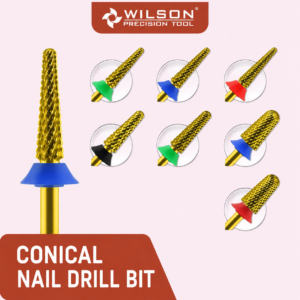
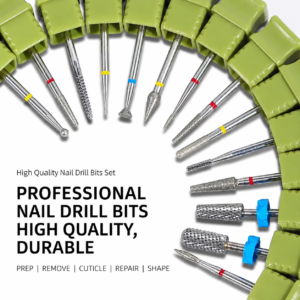
Professional nail drill bits help nail technicians remove gel, refine cuticle areas, shape acrylic and smooth surfaces with controlled, efficient passes. This collection brings together carbide, diamond, flame, tapered and sanding options for salon prep and removal work. Choose the bit by task first, then match the grit and shape to the material and working area.
Showing all 6 resultsSorted by latest
-
Nail Beginners
China Wilson Nail Drill Bits: The Best Precision Solution
Price range: $15.90 through $16.80
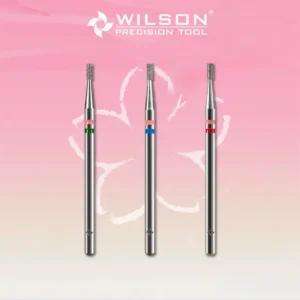
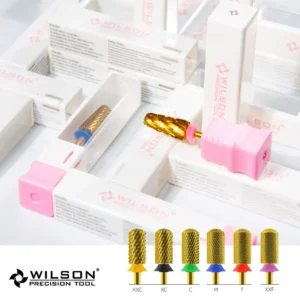
Practical selection guide
How to Choose the Right Nail Drill Bit
Start with the material you need to work on. Carbide and tungsten carbide bits remove cured gel or acrylic efficiently, while diamond bits give better control around cuticles, sidewalls and narrow prep areas. Next, match the shape to the access point: flame shapes open and clean the cuticle pocket, tapered barrels reach sidewalls, and rounded or flat working surfaces refine broader areas.
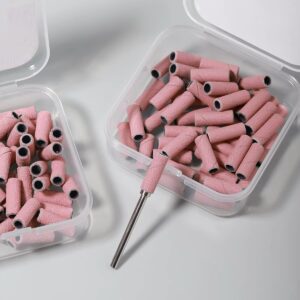
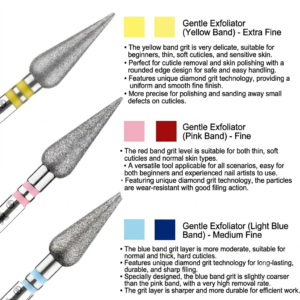
Grit affects both speed and control. Coarser bits remove bulk product faster but should stay on enhancement material. Fine diamond bits and 180–240 grit sanding bands suit lighter refinement when used with minimal pressure. Keep the bit moving, approach the nail at a shallow angle and avoid holding it in one place, which can create heat. Check whether the bit is designed for forward, reverse or both directions before switching hands. Use light pressure, keep the bit moving and follow the speed guidance supplied with your e-file and chosen bit. Beginners should practise on tips first and choose smaller working heads that make the contact point easy to see.
| Task | Best starting choice | Working note |
|---|---|---|
| Gel removal | Carbide or tungsten carbide | Use on cured product, not the natural nail. |
| Cuticle & sidewalls | Fine diamond flame | Use light pressure and keep the tip away from skin. |
| Acrylic shaping | Carbide barrel or tapered bit | Choose grit according to the amount of bulk removal. |
| Surface finishing | Fine diamond or 180–240 grit band | Use short, moving passes to control heat. |
Related guides
Learn before you file
Common questions
Nail Drill Bit FAQ
Which nail drill bit is best for gel removal?
A carbide or tungsten carbide removal bit is the usual choice for reducing cured gel efficiently. Select a grit that matches the product thickness and keep it off the natural nail.
What is the difference between carbide and diamond bits?
Carbide bits cut cured enhancement product with fluted blades. Diamond bits abrade more gently and are commonly used for precise cuticle, sidewall and preparation work.
Can nail drill bits be used on natural nails?
Only bits and grits intended for natural-nail preparation should be used, with very light pressure. Coarse carbide removal bits should remain on gel or acrylic product.
Which grit should a beginner choose?
Fine diamond bits and 180–240 grit sanding bands provide a more controlled starting point. Practise on nail tips before working close to skin or a natural nail plate.
How do I reduce heat while filing?
Keep the bit moving, use light pressure, avoid repeating passes in one spot and replace worn bits. Excess pressure and a dull bit both increase friction and heat.
When should a nail drill bit be replaced?
Replace it when cutting efficiency drops, the surface becomes damaged, the bit vibrates, or cleaning no longer restores performance. Never use a bent or corroded bit.
