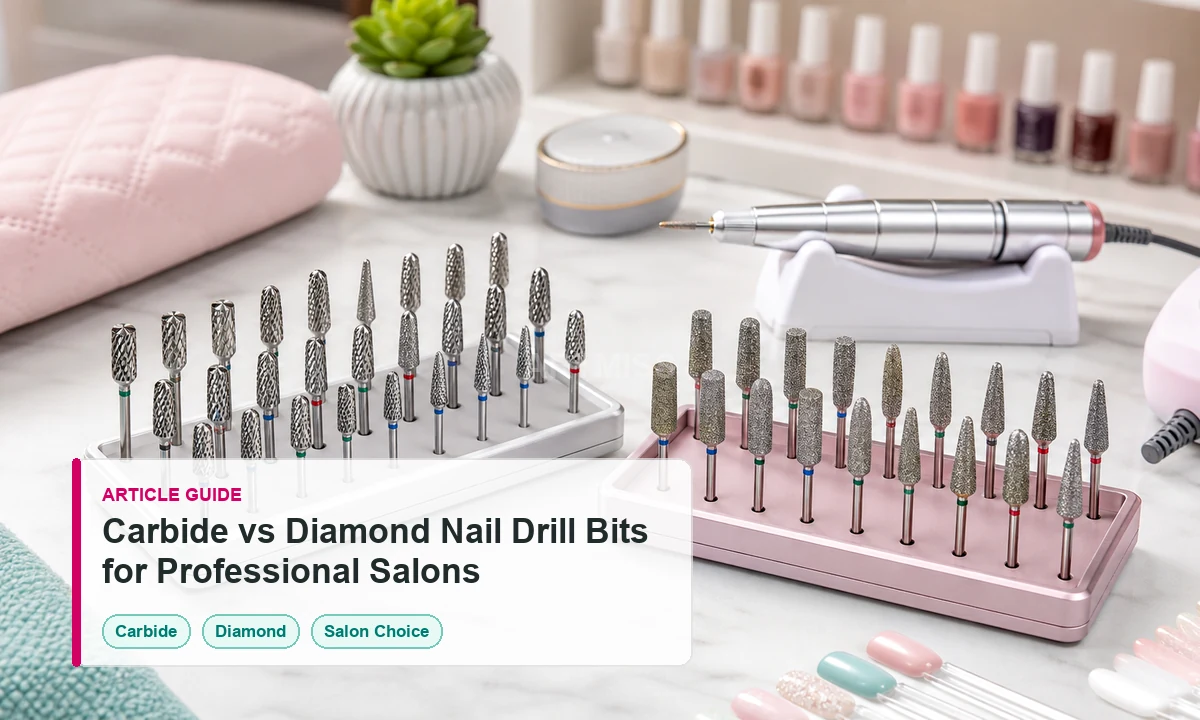
I am Amia from Artmiss nail mart, and I wrote this guide for working nail technicians who need clear, practical direction before using a drill bit on real clients. Carbide vs Diamond Nail Drill Bits for Professional Salons matters because the right bit shape, grit, pressure, speed, and cleaning routine can make salon prep faster while keeping the natural nail plate respected.
Quick Navigation
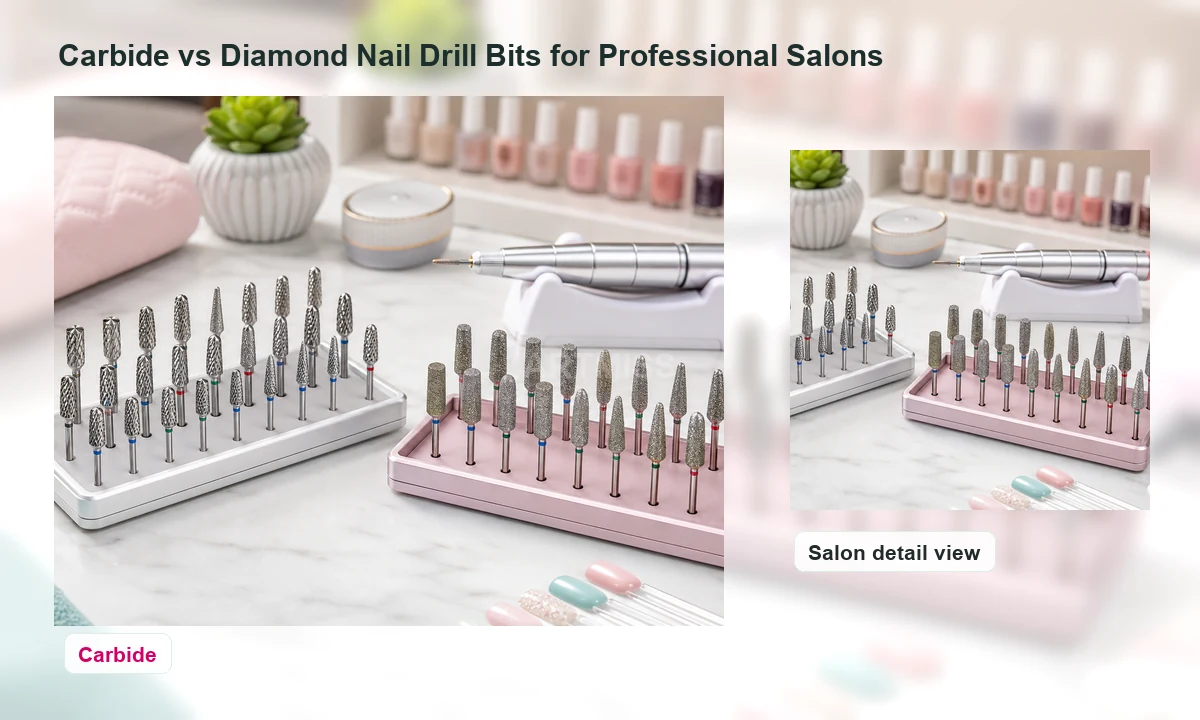
Carbide and Diamond Drill Bits: When Salons Should Use Each
Carbide Bits: Product Removal and Speed
- Carbide nail drill bits cut product efficiently, so they are useful for acrylic, hard gel, thick overlay reduction, and fast refill shaping.
- They are not beginner-friendly near natural nail plate areas because the cutting action can remove material quickly.
- Use carbide when the job is product removal, not delicate cuticle cleaning.
Diamond Bits: Prep, Skin, Refinement
- Diamond nail drill bits abrade rather than cut, which makes them better for cuticle refinement, sidewall prep, and smoothing small product edges.
- Fine diamond flame bits are practical for salons because they work in tight spaces and support clean base gel application.
- Diamond grit selection matters: extra fine for sensitive clients, fine for daily services, and medium fine for tougher skin zones.
carbide vs diamond nail drill bits Selection: Shape, Grit, Speed
- Shape match: Flame bits fit sidewalls and cuticle pockets; barrel bits are more common for surface reduction; needle bits are only for very controlled detail work. In a salon, choose the shape before choosing the speed because a wrong shape creates pressure points even at low RPM.
- Grit match: Extra fine and fine diamond bits are better for cuticle refinement, while medium or coarse bits should be limited to product work. For thin natural nails, stay conservative and use shorter contact time.
- Speed match: Beginners should practice on training tips before client work. Keep the hand stable, keep the bit moving, and reduce RPM whenever the client feels heat or vibration.
Salon Workflow: Prep, Removal, Cleaning
Choosing Between Carbide and Diamond
- Identify whether you are removing product or preparing the natural nail area.
- Use carbide for bulk product only when trained.
- Use diamond for cuticle and sidewall precision.
Salon Training Rule
- Teach assistants on practice tips first.
- Separate product-removal bits from natural-nail prep bits.
- Write a bit chart near each drill station.
Professional Comparison Table
| Scenario | Bit Choice | Salon Action | Risk Control |
|---|---|---|---|
| Bulk gel reduction | Carbide | Fast product removal | Stay above base layer |
| Cuticle refinement | Diamond flame | Fine detail abrasion | Light pressure only |
| Sidewall cleaning | Fine diamond | Follow sidewall contour | Avoid live skin |
| Beginner training | Extra fine diamond | Practice control first | Skip aggressive carbide |
Related Artmiss Nail Tools and Gel Products
- Jjiang 50g Builder Base Gel: useful for professional salon workflow planning and repeat ordering.
- Naillove Professional 2-in-1 Building Base Gel: useful for professional salon workflow planning and repeat ordering.
- MODING C9 Water Light Top Coat: useful for professional salon workflow planning and repeat ordering.
- Painting Gel for Ombre Nail Art: useful for professional salon workflow planning and repeat ordering.
- Diamond Flame Nail Drill Bits: useful for professional salon workflow planning and repeat ordering.
For the complete order of cleaning, shaping, base gel, color gel, nail art, curing, and top gel, use the complete nail art process guide.
Buying Notes for Professional Salons
- Tool care: Clean visible dust and product residue before disinfection. Do not store a dusty bit inside a closed case.
- Brush and accessory care: Brushes are consumable items, but cap storage and prompt cleaning can extend their working life.
- Delivery: Average international delivery time is usually 7-12 days from order placement.
- Policies: Purchase policy, refund policy, and privacy policy are available in the Artmiss website footer.
Official References